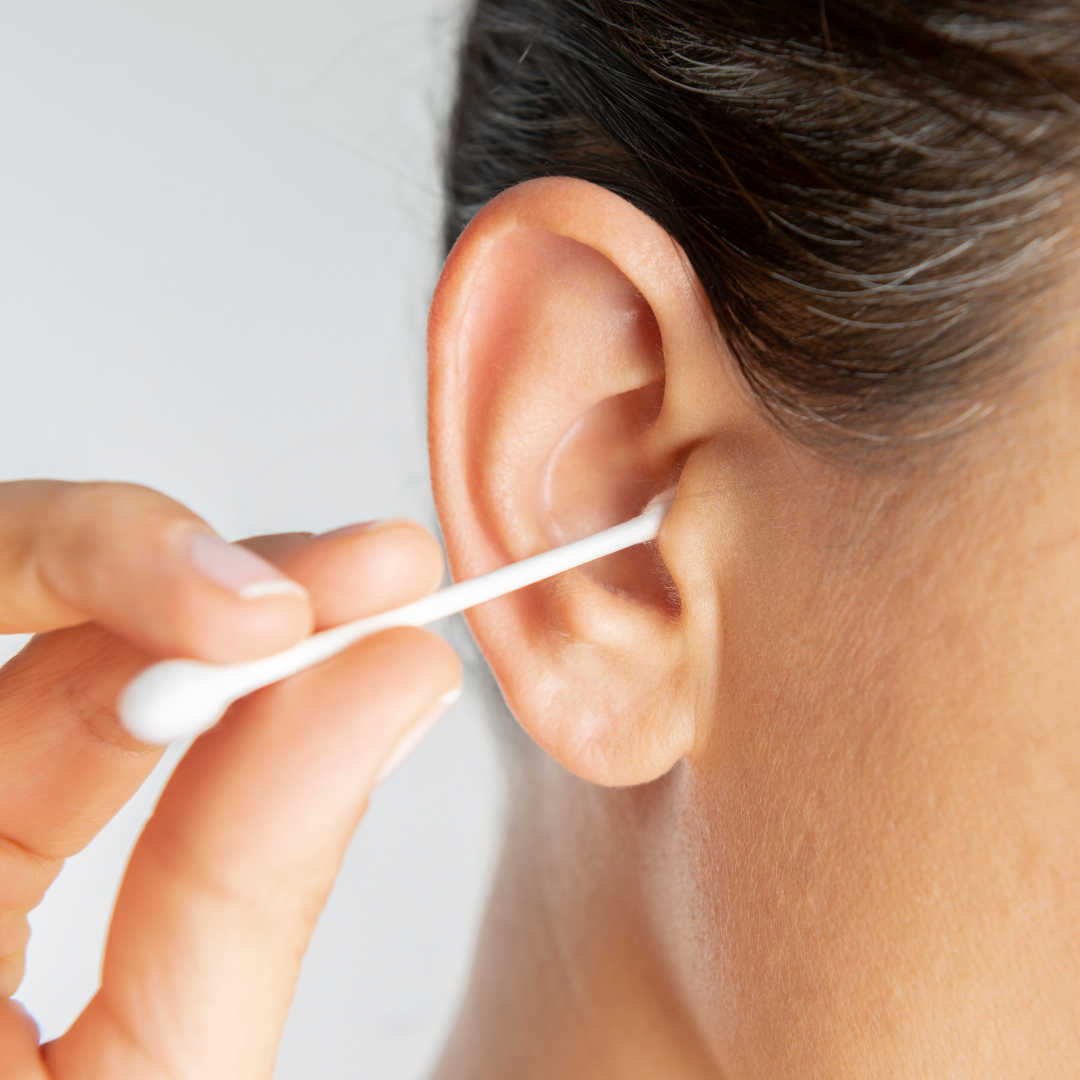
While many consider cotton swabs handy cleaning devices, placing them in the ear canal disrupts natural clearing and causes physical damage. We can determine whether earwax actually needs removal and recommend a method suited to your ear health. Ear canals typically maintain themselves without assistance; nonetheless, if stubborn buildup develops, we help individuals safely eliminate excess wax.
Clinical Reasons Why Q-Tips Damage the Ear Canal
Clinically speaking, earwax, or cerumen, should never be regarded as dirt or debris. It traps dust and debris, helps limit bacterial growth, lubricates the ear canal, and protects its sensitive skin. Routine chewing and epithelial cell migration continuously transport spent wax toward the concha, where it falls out or clears during bathing.
Inserting a cotton swab directly into the auditory canal interferes with this natural clearance mechanism. Although the cotton may collect a small amount of wax, it often pushes the remaining material closer to the eardrum. Repeated use can pack wax into a firm blockage and create the plugged sensation that encourages even more cleaning.
Cotton swabs may be used around the folds of the outer ear, but they should not enter the canal.
Potential Ear Damage and Complications from Q-Tips
The delicate dermal lining of the auditory canal is remarkably thin and susceptible to lacerations. Small dermal abrasions produce soreness or light bleeding while allowing microbes to enter, raising the incidence of outer-ear infection. There is also a risk that the cotton tip will detach and become stuck deep inside the auditory canal.
Documented injuries associated with cotton swabs include:
- Earwax pushed into a deeper impaction
- Cutaneous tearing, swelling, canal inflammation, or bleeding
- Acute otitis externa or canal infection
- Retained cotton tip or foreign object obstruction
- A torn or perforated eardrum
- Mechanical trauma to the middle-ear ossicles behind the eardrum
- Transient or irreversible shifts in hearing thresholds
- Distressing tinnitus, secondary dizziness, or debilitating ear pain
Although catastrophic damage remains relatively rare, unexpected arm bumps, hand slips, or excessive insertion depth easily cause acute harm.
Clinical Guidelines on Earwax Removal Frequency
Most people do not need to remove earwax on a schedule. Healthy ears continually move wax outward, and routine bathing usually cleans the visible outer ear. Frequent overcleaning creates dry, irritated canal surfaces while amplifying the risk of severe impaction or microbial invasion.
Professional removal is necessary when wax obstructs the canal, obscures our view of the tympanic membrane, hinders a hearing aid, or creates physical symptoms.
Safe Home Strategies for Managing Earwax
If earwax is not causing symptoms, leaving it alone is usually the safest option. Restrict hygiene to wiping the outer ear folds with a damp cloth while permitting the canal to self-evacuate.
Should cerumen require breakdown, our team may recommend commercial cerumen-removal drops or formulas featuring saline, mineral oil, glycerin, or carbamide peroxide. Use only the labeled amount and for the labeled duration. Cease use at once if you experience localized pain, acute vertigo, cutaneous rash, or intensifying discomfort.
Performing irrigation at home is unsafe for certain individuals and must only proceed after a clinician verifies ear safety and explains the protocol. Never attempt to flush your ear canal with a pressurized dental water irrigator. Reject risky methods such as ear candling, rigid metal scoops, camera-guided probes, hairpins, and home suction gadgets. Such unregulated implements can cause thermal burns, canal lacerations, eardrum perforations, or deeper cerumen impactions.
Recognizing When Earwax Requires Clinical Intervention
You should book a clinical appointment if your ear feels blocked following softening drops, cerumen is deeply wedged, or home methods fail to work. Professional intervention is highly advisable for individuals with mobility challenges, narrow ear canals, hearing aid devices, or surgical backgrounds that make home care dangerous.
Schedule an ear exam promptly if you experience:
- Sharp ear pain, chronic itching sensations, or localized tenderness
- Otorrhea containing blood, active pus, serous fluid, or an unpleasant odor
- Fever or swelling around the ear
- Newly developing ringing in the ears or balance disturbances
- Sudden hearing drops or auditory deficits that remain after wax removal
- A possible eardrum perforation or cotton fragment trapped inside
- Frequent wax buildup that occludes or damages hearing aids
Treat sudden hearing loss in one ear as a medical emergency rather than assuming it’s wax. Rapid audiological testing differentiates simple cerumen obstruction from serious, time-sensitive inner ear disorders.
Professional Techniques for Cerumen Removal
We first examine the canal with an otoscope or microscope to confirm that wax is present and look for infection, injury, or an eardrum perforation. The ideal extraction strategy is dictated by the consistency of the wax, ear canal dimensions, clinical background, past ear procedures, and patient physical stability.
In-office clinical procedures include:
- Application of enzymatic softening drops before or during extraction
- Controlled irrigation with body-temperature fluid when the eardrum is intact
- Safe, gentle suction extraction executed under direct microscopic guidance
- Precision manual debridement using sterile ear curettes, loops, or specialized forceps
Continuous visual monitoring enables the practitioner to navigate around sensitive epithelial tissue and pause immediately if discomfort arises. Dense or desiccated cerumen impactions frequently necessitate using more than one removal method. After removal, the ear can be reexamined to confirm that the canal and eardrum are healthy. If aural fullness, ear ringing, dizziness, or auditory impairment remains after cleaning, further diagnostic evaluations can identify the root issue.
Book a Professional Earwax Evaluation and Removal
If you notice a blocked sensation or changes in auditory clarity, contact us for an evaluation rather than inserting a Q-Tip. The diagnostic session entails reviewing your symptom timeline, past otologic procedures, hearing aid usage, past home treatments, and risk factors for recurring cerumen. Contact us now to schedule an appointment for comprehensive, expert earwax removal.
