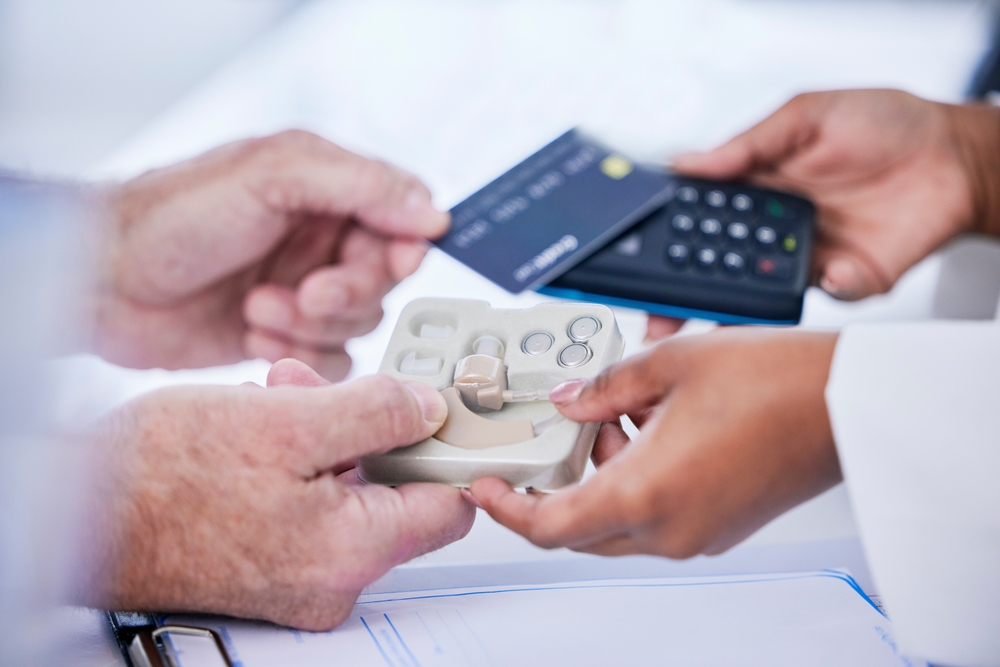
For individuals evaluating advanced auditory technology, the upfront capital required is frequently the first noticeable factor. Depending on the technology and level of care involved, modern hearing aids can range from a few hundred dollars to several thousand. Such a capital requirement often surprises families, leading them to prematurely halt their pursuit of better auditory health.
While the financial baseline is significant, it does not represent the final out-of-pocket reality. Most individuals fail to recognize that the initial quote is infrequently the true financial burden after adjustments. By leveraging private insurance benefits, tax-advantaged health funds, and structural payment programs, the net cost can be minimized.
We provide this breakdown of available funding avenues to empower your decision-making before your consultation, optimizing your path to enhanced sound localization.
Maximizing Private and Employer Insurance Benefits for Acoustic Devices
Prior to resigning yourself to full private payment, a rigorous audit of your healthcare policy is required.
If you have private or employer-sponsored insurance, coverage for hearing aids can vary widely. Some plans cover a portion, while others offer a fixed allowance. Regrettably, specific commercial contracts provide no financial remedy for hearing preservation. For exact details, communicate directly with your policy’s member services department regarding durable medical equipment clauses. You should explicitly confirm benefit renewal intervals, whether post-fitting care is covered, and contracted clinic networks.
When navigating public health options, recognize that traditional federal Medicare components do not subsidize these devices. Conversely, privately administered Medicare Advantage options frequently offer hearing-specific stipends as a core incentive.
Under Medicaid programs, specific device coverage is highly dependent upon regional state mandates. A selection of states do extend hearing aid benefits to eligible adults, making a proactive provider query essential.
HSA & FSA: An Overlooked Way to Pay for Hearing Aids
An existing Health Savings Account (HSA) or Flexible Spending Account (FSA) represents an exceptional mechanical advantage for offsetting medical costs.
Hearing aids are a qualified medical expense, which means you can use pre-tax dollars to cover the cost. This statutory exemption provides an immediate discount equivalent to your marginal tax bracket. To illustrate, a patient in the 22% federal tax tier purchasing a $2,000 system reduces their real economic impact to approximately $1,560. HSAs roll over year to year, while FSAs usually expire at the end of the year. Consequently, tactical deployment of seasonal FSA allocations prior to their structural expiration is highly recommended! Both prescription and many over-the-counter hearing aids qualify, so it’s worth checking your balance before your appointment.
Amortization and Medical Financing Strategies for Advanced Hearing Systems
A majority of specialized clinics maintain strategic partnerships with medical lending entities to offer installment-based payment structures. These specific arrangements, often administered via platforms such as CareCredit, frequently feature promotional interest-free windows. Consequently, patients are empowered to select the appropriate level of technological sophistication rather than compromising on their clinical needs.
Integrating payment plans into your treatment discussion is a routine and professional practice. Patients experiencing financial hesitation should openly review these parameters during their diagnostic evaluation. It is important to remember that these specialized lending mechanisms were engineered specifically for these scenarios! Ultimately, accessing essential medical technology to preserve communication should remain accessible without risking economic duress.
Navigating Veterans Administration (VA) Otology and Hearing Aid Benefits
Hearing loss is one of the most common service-related conditions among veterans, and it’s important to know that the Veterans Administration (VA) offers meaningful support.
Veterans meeting specific enrollment criteria can procure advanced prescription amplification devices entirely through VA medical benefits. Regardless of whether your auditory deficit is directly tied to your service record, your general enrollment status can open these pathways. If you haven’t explored your VA benefits yet, it’s worth reaching out to your local VA facility or asking your provider for help navigating the process.
Civic and Non-Governmental Resources for Affording Hearing Technology
Nonprofit and community-based programs can help make hearing aids more affordable. National and global entities such as the Starkey Hearing Foundation and Lions Club International provide hardware grants to eligible candidates. Furthermore, a number of municipal and state agencies sponsor dedicated initiatives for economically disadvantaged adults.
These programs can have eligibility requirements and waiting lists, but they’re worth exploring, especially if your insurance coverage is limited. You can easily audit the baseline criteria on the respective organization’s web platform to begin the application process.
Analyzing Over-the-Counter (OTC) Hearing Options Versus Prescription Systems
The OTC retail segment offers a highly economical alternative, with average pair pricing falling between several hundred and one thousand dollars. Such devices are clinically appropriate for mild or early-stage moderate presbycusis in self-directed adult users.
Yet, without the intervention of an expert to customize the acoustic programming, many users fail to achieve adequate speech intelligibility. In cases of advanced sensory impairment, prescription hardware calibrated to a precise audiogram is mandatory for successful rehabilitation.
Prior to opting for a retail OTC device solely based on economic factors, a formal diagnostic audiogram is highly recommended. An OTC unit provides a reasonable short-term stopgap for patients navigating the administrative timelines of specialized procurement. They provide immediate, basic acoustic access that outperforms unamplified conditions, though they lack long-term clinical viability.
A Collaborative Approach to Affordable Hearing Care and Device Selection
Our clinical team specializes in managing financial procurement and insurance coordination on a daily basis. The available matrix of alternative funding mechanisms is frequently broader than patients anticipate.
We request that you present your comprehensive policy details during your consultation so we can map out covered benefits and structure an affordable plan. Phone our office location today to secure a consultation slot or coordinate your evaluation via our website. We are fully prepared to assist you in designing a financial strategy for your treatment that remains sustainable.

