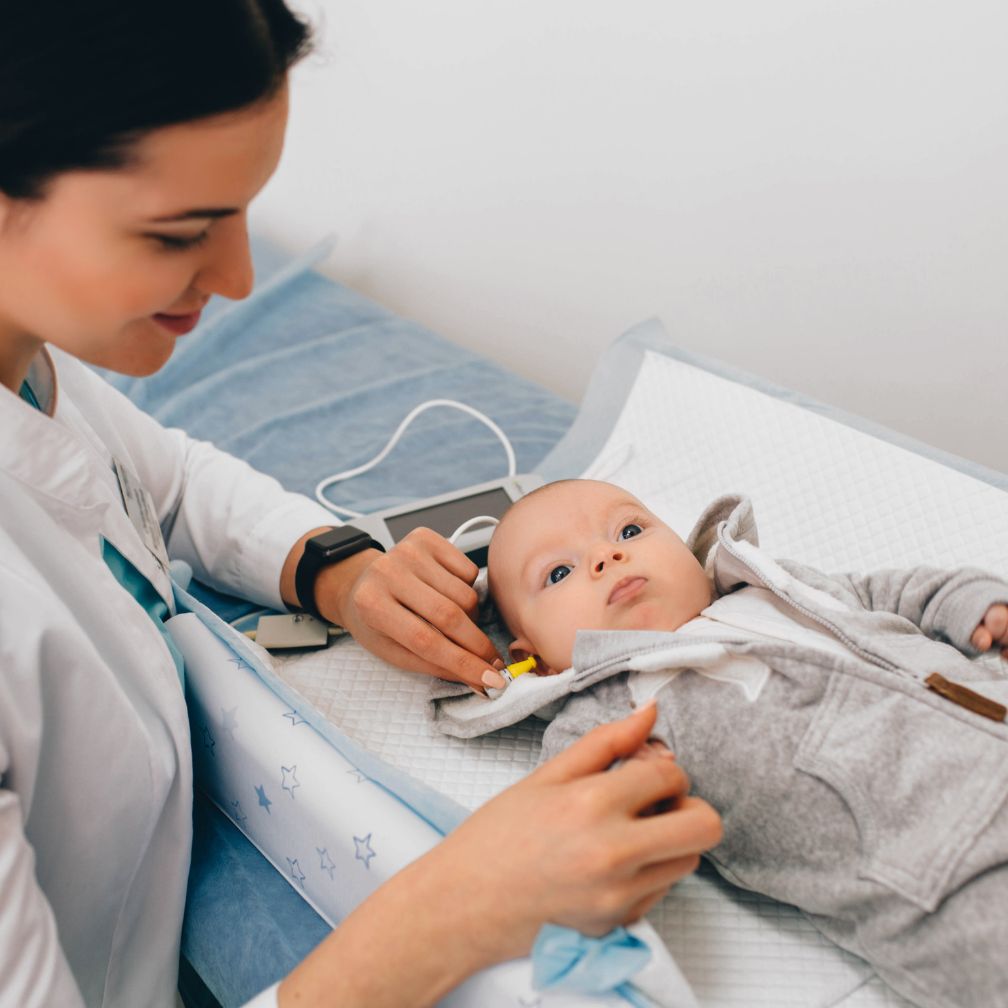
For parents bringing home a newborn, understanding that their baby exhibits auditory deficits can trigger overwhelming feelings of anxiety. The encouraging message is clear: by utilizing early testing and supportive therapies, children with auditory issues can truly thrive. Positively, these infants can master verbal communication, social capabilities, and meaningful connections across their environment, attaining a truly rich existence!
Pairing classic hearing devices with advanced cochlear technology delivers two outstanding solutions for assisting infants who exhibit hearing loss. Within this detailed breakdown, we assess their primary mechanics and detail how to pick the proper device for your child.
Grasping the Basics of Pediatric Hearing Loss
Hearing impairment in newborn infants typically originates from distinct underlying sources, including:
- Specific hereditary genetic markers (even absent any documented parental history)
- Severe perinatal infectious diseases including cytomegalovirus (CMV) or rubella transmission
- Adverse intrapartum events, including fetal oxygen deprivation or early delivery
- Particular pharmaceutical treatments utilized inside specialized newborn intensive units
What constitutes the single most vital measure? Swift clinical diagnosis. Due to these facts, newborns across the United States undergo mandatory hearing screening prior to hospital discharge. Expert pediatric auditory doctors enforce the recognized “1-3-6” diagnostic framework:
- Early screening completed within 1 month of birth
- Definitive medical diagnosis established before 90 days of life
- Early therapeutic care (utilizing personal devices or developmental therapy) started within 180 days of birth
Achieving these diagnostic benchmarks provides babies a strong foundation for healthy speech, language, and cognitive growth. Should you desire expert guidance concerning these newborn screens, your pediatrician remains eager to support you!
Infant Hearing Aids: Overview & Benefits
Regarding babies affected by mild to severe hearing loss, prescription hearing aids generally function as the primary intervention pathway. These small, custom-fit devices amplify incoming audio allowing babies to detect verbal language and background sounds far more distinctly.
Specialized infant-adapted hearing aids serve as:
- Fully safe and comfortable for infants aged just a few weeks
- Constructed using soft, non-irritating ear inserts that get updated throughout early childhood development
- Assembled with locking battery compartments and child-focused protective mechanisms
- Precisely calibrated by a specialized pediatric audiologist to match your child’s specific auditory needs
While your infant develops, these devices demand ongoing professional tuning to ensure proper placement and accurate acoustic output.
Cochlear Implants in Infant Auditory Care
If an infant is diagnosed with severe to profound sensorineural hearing loss that receives minimal benefit from traditional hearing aids, specialists routinely suggest a cochlear implant. Diverging significantly from traditional hearing devices, cochlear implants:
- Are integrated into the inner ear through surgery bypassing non-functional outer hair cells
- Routinely bypass non-functioning sensory hair cells of the inner ear system
- Convert surrounding audio into precise electrical signals that stimulate hearing nerve pathways directly
Integrated cochlear implant systems serve as:
- Fully approved by the FDA for infants aged 9 to 12 months and older
- Most beneficial when reinforced by specialized rehabilitation and consistent family engagement
- Recommended solely following exhaustive clinical evaluations by an expert audiologist and ear, nose, and throat doctor
That pre-surgical path incorporates diagnostic imaging, specialized auditory testing, and setting realistic expectations for future communicative success.
Hearing Aids Versus Cochlear Implants: A Direct Comparison
- Mild to severe hearing loss relies on Hearing Aids; Severe to profound hearing loss requires Cochlear Implants
- Non-Invasive: Hearing Aids; Invasive surgical installation: Cochlear Implants
- Physical sound amplification: Hearing Aids; Direct conversion to electrical signals: Cochlear Implants
- Application starts during early infancy: Hearing Aids; Surgery can begin at 9-12 months: Cochlear Implants
Closing Perspective: Choosing Between Hearing Aids and Implants
Should your baby receive a formal hearing loss diagnosis, rest assured that clear options and robust community resources exist to help you. By partnering with skilled pediatric auditory specialists, many children go on to develop language skills that are on par with their peers.
Whether your child is a candidate for hearing aids or cochlear implants, early action establishes a foundation for lifelong communicative success.
Have you got specific questions concerning your newborn’s hearing abilities? Contact our staff today to obtain an exhaustive evaluation and custom-designed care plan.
