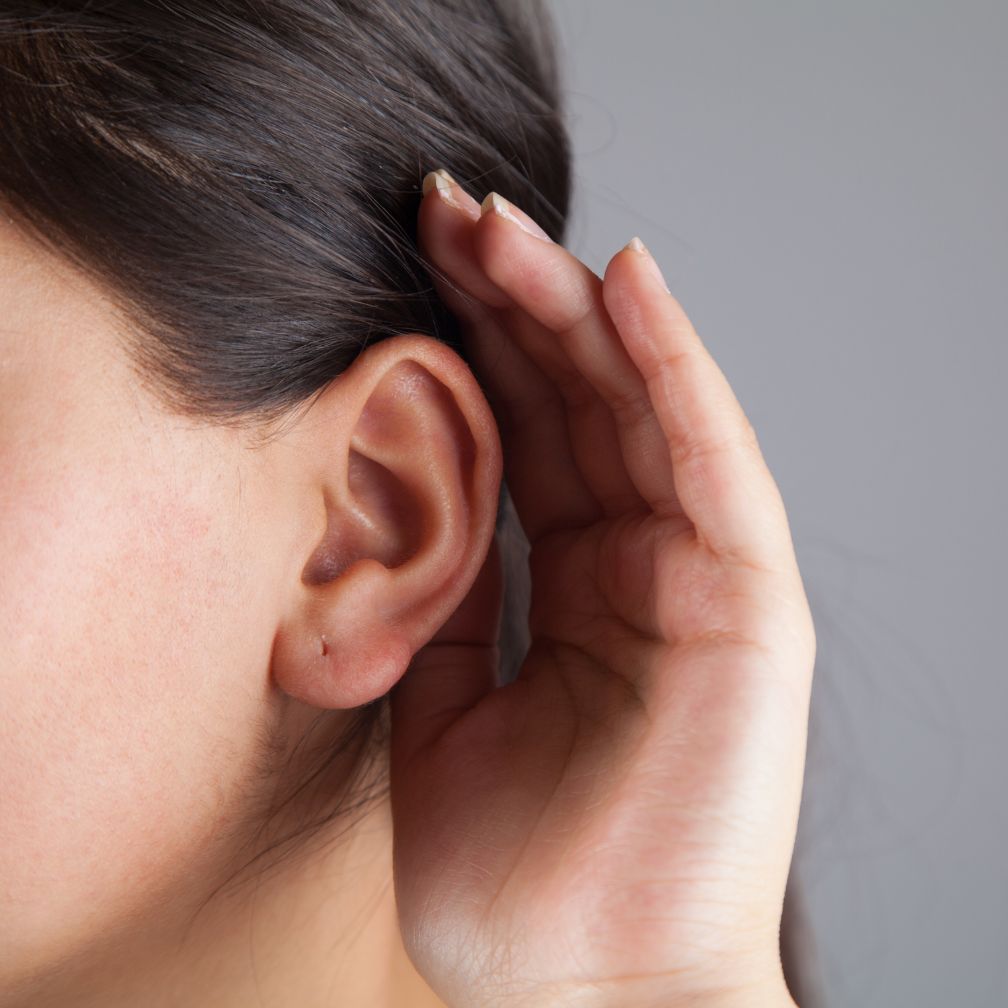
What causes that peculiar, unprompted sound that feels like ambient static or trapped air whispering in your ears? Why can’t anyone else hear it? This localized head noise is a genuine physiological event, not a trick of the mind.
Thankfully, this specific issue is distinct from “phantom ring syndrome,” a sensory misfire tied to device dependency where individuals constantly anticipate digital tones or alerts.
But it could be tinnitus. Your perception of this sound is completely valid, though you must remain aware that several everyday variables can cause tinnitus to flare up.
Even with this internal hum, your ears retain the capacity to process active human speech. Instead, it functions as an omnipresent layer of sensory noise transposed directly on top of your standard daily hearing.
In this guide, we will investigate the neurological origins of this static, define its pathology, and explore proven methods to minimize or eliminate its impact.
What is tinnitus & why do I hear this white noise in my head?
Tinnitus is (usually) a form of hearing loss. It manifests as a perpetual or fluctuating sound profile that occupies the foreground of your sensory perception. Depending on individual pathology, this subjective sound can remain mild enough to ignore during active hours. For others, however, the unremitting hum inside their skull feels utterly deafening, causing massive psychological distress and exhausting their patience.
You have likely attempted to describe this exhausting sensory distortion to friends, but this particular manifestation of hearing loss is incredibly abstract to those with normal hearing.
Many patients struggle to accept that a roaring sound inside their ears cannot be recorded or validated by outside observers. This paradox leads many to worry if they are suffering from a central mental delusion or cognitive misfire. You may find yourself asking how a silent hum can completely disrupt your concentration and impair your social interactions. Or sleeping?
Why Silence Paradoxically Amplifies Your Tinnitus Symptoms
You have likely observed that as your immediate surroundings become increasingly silent, your perception of the tinnitus scales up dramatically. This structural shift happens because the internal hum doesn’t have to fight against real-world sound waves—as seen when people lock down their bedrooms for total quiet at night. They don’t have any TV playing, no radio, no noise at all. Add to that the fact that you’re probably alone with your thoughts during this time, and when you start to notice the buzzing or humming in your ears, it turns into the only thing you can think about, making the symptoms seem even worse. Whether your condition presents as a faint hiss or a booming roar, a quiet nocturnal space creates a sensory vacuum that allows tinnitus to fully take control of your mind.
Differentiating Your Symptoms: Is a Rushing Wind Sound Actually Tinnitus?
While explaining the condition to normal-hearing peers is a major hurdle, comparing notes with another person who has tinnitus can create unexpected doubt. Because their internal audio profile may feature entirely unique pitches or patterns compared to your own, you might mistakenly assume your specific condition has a different medical diagnosis.
But chances are, it is. This is due to the reality that tinnitus is a highly polymorphic condition, expressing itself through a vast array of acoustic shapes depending on the individual. These include, but aren’t limited to, hearing:
- A continuous blanket of high-frequency digital static
- An unceasing structural or electrical humming sound
- Buzzing
- A persistent, thin ringing frequency that cuts through silence
- Thumping
- Dial tone
With rare exceptions, this internal static is entirely subjective, meaning no outside observer can measure or perceive the sound. Therefore, asking a general practitioner to audibly detect your internal static is a medical impossibility. Instead, your regular physician must depend completely on your personal testimony to chart the condition.
This can cause people to feel invalidated by a doctor who doesn’t specialize in hearing loss.
Sharing his experience, a steelworker named Thomas noted: ‘When the internal ear static first became chronic, I sought help from my primary care provider. Although the clinician noted that it was likely a case of tinnitus, he didn’t seem to comprehend how destructive the noise was to my focus.’ He spoke about it like it wasn’t really there. He seemed to think I could just ignore it and really didn’t offer any solutions.”
Consulting a dedicated hearing professional effectively addresses this communication breakdown and unlocks access to advanced medical solutions. Sometimes the sound itself can offer clues as to how to treat it.
Investigating Vascular Variations: Rushing and Whooshing Frequencies
Accurately communicating your history is inherently challenging because the disorder utilizes an incredibly vast array of acoustic profiles across different patients. Consider a scenario where you perceive a fluid-like whooshing or a rhythmic thumping that beats in unison with your heart; this pattern points directly to a distinct condition called pulsatile tinnitus.
The reassuring reality is that this specific rhythmic variant is highly responsive to medical intervention, as it is generally driven by treatable vascular conditions like high blood pressure or arterial blockages.
That roaring sound is frequently generated by localized circulatory friction inside narrowed vascular structures near the ear, creating an audible murmur known as a bruit. It’s critically important to get this checked out and treated, as in rare cases, the whooshing sound could be a sign that you’re heading for a seizure or stroke, either of which could prove fatal.
The Auditory Reality of Pulsatile Symptoms: External Verification Options
The reality is undeniable: this persistent head noise is a legitimate, exhausting condition that severely impacts quality of life. Though standard variations lack external markers, specific cases of objective pulsatile tinnitus allow an experienced otolaryngologist to deploy tools like an acoustic stethoscope to physically monitor the exact same whooshing you perceive. It is vital to understand that this objective phenomenon is unique to circulatory-driven cases, a category that is statistically much rarer than standard neurological tinnitus.
The Primary Triggers of Tinnitus: Understanding Sensory Damage
In most clinical case histories, the principal cause behind this internal static is a history of sustained exposure to hazardous noise levels. This pattern makes the condition an occupational hazard for musical performers, audio engineers, and workers across various trades who navigate intense decibel exposure shift after shift.
A variety of common career tracks expose the human ear to hazardous noise levels that routinely trigger chronic static, such as:
- Factory Work – Operating around unmitigated industrial machinery for consecutive hours creates a highly toxic environment for your delicate hearing mechanisms. Beyond the raw volume, the high-pressure nature of manufacturing work spikes your stress hormones, which serves as a major secondary driver that worsens the internal ringing over time. If your job positions you near an active pneumatic riveter, you are facing a massive risk; these devices exceed 125 decibels, a level that causes immediate structural ear damage and severe, permanent static.}
- Modern Farming – Don’t blame it on the roosters. While those loud, early-risers clock in at around 90 decibels, there are many things on the farm that are much louder. Tractors, combines, cherry-pickers, milking machines… all of these farming implements make a lot of noise. Need to repair the fence? Even your table saw can pump out over 85 decibels, which is damaging over long periods of time.}
- Aviation – A commercial jet propulsion system generates a staggering 140 decibels of acoustic energy, even from a distance of a hundred feet. While professional aviators generally wear protective communication headsets, pilots of small or regional aircraft operate right next to the engine firewall. No passive or active headset is completely capable of shielding the inner ear from this intense, vibrating sound pressure, meaning your hard-earned flight hours are simultaneously causing gradual, permanent sensorineural damage.}
- Motorcycle Traffic Enforcement – You don’t need a badge to mount a motorcycle, but spending your entire working day atop a roaring engine exposes your ears to a toxic combination of motor exhaust and high-speed wind noise that induces chronic tinnitus. This identical sensory threat applies to operators of industrial snowmobiles and personal watercraft, though such vehicles are rarely part of a standard corporate job unless you work in an exceptionally adventurous field.}
- Nightlife and Hospitality Personnel – To fulfill your duties, you must accurately capture a patron’s drink order from across a crowded room. However, the ambient acoustics in modern nightclubs are set so high that discerning speech becomes a massive physical struggle, forcing your auditory cortex to work overtime against a wall of sound. If the venue hosts a live band or high-powered subwoofers, your inner ear suffers the exact same structural trauma experienced by the musicians on stage.}
The common denominator in all these jobs is that the delicate sensory hair cells within the inner ear have been bent or broken by continuous sound pressure. These delicate cellular structures are responsible for converting physical sound vibrations into electrical signals that the brain can decode into meaningful language. The critical issue is that these auditory hair cells cannot replicate or heal once they have been crushed by noise, resulting in lifelong hearing distortions and chronic tinnitus.
What Is Driving the Volume Up? Secondary Tinnitus Accelerators
In addition to primary acoustic trauma, a variety of systemic health issues and lifestyle habits can actively amplify the baseline static in your ears.
- Mental Health Challenges – Living with generalized anxiety or depression creates a highly frustrating catch-22 scenario. The moment your stress or mood drops, your neurological sensitivity to the ear ringing spikes, which immediately causes your psychological distress to worsen in response.}
- Ignoring Your Body’s Warning Signs – Your ears possess natural defensive thresholds and experience physical discomfort when a room is too loud. Rather than simply enduring the painful volume, you must actively protect your auditory system, as these delicate cells cannot be replaced once destroyed.}
- Systemic Hypertension – Allowing your blood pressure to remain elevated can actively restrict the critical microvascular oxygen supply reaching your delicate inner ear. This cardiovascular strain not only intensifies the perceived volume of the static instantly, but it also accelerates permanent cellular damage over a long timeline.}
- Smoking – That antsy feeling that you get in between cigarettes can worsen symptoms. While the answer may seem like you should have another cigarette, this is only making it worse the longer you smoke because of the impact smoking has on your cardiovascular system.}
- Dietary Triggers – Clinical evidence indicates that high doses of caffeine and certain artificial sweeteners can act as neural stimulants, making tinnitus appear louder. We recommend maintaining a detailed dietary log to track your meals alongside your daily symptom spikes, allowing you to isolate and eliminate individual chemical triggers.}
- Social Environments – Interacting with highly critical or anxiety-inducing people can elevate your heart rate and worsen your ear static by provoking stress and depressive patterns. It is vital to audit your close relationships to protect your health, determining whether these connections are worth the toll they take on your auditory peace. Ultimately, you cannot control how other people act, but you have complete control over how often you interact with them.}
- Maternal Shifts – Roughly a third of all pregnancies involve the onset of tinnitus, typically caused by the intense hormonal changes, fluid retention, and blood pressure adjustments that occur during gestation.}
- Cerumen Impaction – When old earwax migrates deep into the canal and impacts against the delicate eardrum, it can create a variety of unusual, scraping noises. Having that material safely extracted by a medical professional can completely stop the ear ringing on the spot.}
- Ototoxic Pharmaceuticals – A wide array of medications, including specific opiates, broad-spectrum antibiotics, loop diuretics, chemotherapy regimens, and even common over-the-counter NSAID painkillers, carry documented ototoxic side effects. It is highly recommended that you consult both an audiologist and your primary physician to thoroughly evaluate your current drug profile for ear risks.}
Reviewing Effective, Clinically Proven Tinnitus Management Options
If you have an underlying condition, talk to your doctor. Certain medical profiles act as direct amplifiers for ear static, especially chronic panic disorders or uncontrolled hypertension.
Once any known medical condition has been treated, it’s time to look at other options. Proven management modalities encompass choices such as:
- Meditation, Yoga, or another relaxing activity to reduce stress. Managing stress in a healthy way without substances isn’t something that most people learn at home or in school. Many people choose to learn them because they find that these techniques work.}
- Ambient Sound Conditioning – Implementing a bedside white noise generator can supply immediate comfort when you are trying to fall asleep. It is critically important that you never attempt to blast past the internal hum using tight headphones or loud music blocks. Doing so will only inflict further trauma on your stereocilia, driving up the baseline volume of your tinnitus over the long term.}
- A hearing aid, which can be set to cancel the sound. Hearing aids today have advanced features like tinnitus cancellation. They can be programmed during the hearing aid fitting to emit a sound that cancels out the specific tone you hear.}
- Sound treatment, which trains your ear to ignore the sound. Sound therapists emit a sound into your ear that mimics the sound you hear. It teaches your brain to ignore the sound and focus on other sounds, like voices.}
- Cognitive Behavioral Therapy (CBT) – This specialized behavioral methodology gives patients the tools required to break free from anxious obsession and hyper-vigilance. If you are stuck in a habit of tracking negative life events or worrying about uncontrollable global issues, a CBT protocol can help. It provides the neurological retraining needed to anchor your focus on positive milestones and personal goals, effectively lowering the emotional stress that intensifies your ear ringing.}
Analyzing the Clinical Limits of White Noise for Tinnitus Relief
We have all heard the expression regarding fighting fire with fire, but does it make clinical sense to combat internal static with external static? A recent study in England found that while white noise therapy helps those afflicted by tinnitus, it needs to be paired with additional treatments.
The honest clinical reality is that a permanent cure for this condition has not been discovered, meaning our medical goals focus on deploying specialized treatments to help you control and cope with the condition.
Given these facts, what are your best immediate options for addressing your ear ringing? The single most critical action you can take right now is to schedule a comprehensive, professional diagnostic audiogram. The results will pinpoint the precise extent to which your phantom noises are interfering with your capacity to decode spoken language in social settings. Armed with that objective audiological data, you can collaborate with your local ear specialists to build a customized treatment framework.
Audio Illusions: Explaining Phantom Melodies and Speech in Background Noise
Perceiving coherent songs or conversation inside a hum indicates that you are experiencing a unique sensory pattern rather than basic tinnitus. And don’t worry, it’s probably not a form of schizophrenia or other psychiatric condition either. The most likely cause is Musical Ear Syndrome, apophenia, or audio pareidolia. Your brain’s processing centers are incredibly advanced at pattern recognition, frequently attempting to organize chaotic background sound waves into meaningful signals. Consequently, when confronted with a steady, meaningless hum, your cognitive processing filters can accidentally misinterpret the data. For instance, pareidolia represents your mind’s natural habit of translating empty background sounds into a specific memory file, like a distinct musical rhythm. Alternatively, if you perceive vivid songs playing when your immediate surroundings are completely devoid of any real-world sound pressure, you are likely navigating a benign musical hallucination.
